



Card reader terminals are specialized devices that enable retail merchants to accept chip, swipe, and contactless card payments at the point of sale. Choosing the right types of card reader terminals directly affects transaction speed, security, and customer satisfaction. The industry standard for secure card acceptance is set by EMVCo for chip transactions and PCI DSS for data protection, both of which apply to every terminal category in 2026. Card Service Professionals works with U.S. retail merchants, including those in Kentucky, to match the right hardware to each business’s specific payment needs.
1. Types of card reader terminals every merchant should know
Payment terminals fall into five primary categories. Each serves a different operational need, and picking the wrong one costs you money and slows down checkout.
- Countertop terminals. These are fixed devices placed at a checkout counter. Standalone countertop terminals connect via Ethernet or Wi-Fi, include integrated PIN pads, chip and magstripe card slots, contactless readers, and often a built-in receipt printer. They suit high-volume, fixed-location retail.
- Mobile and handheld terminals. Battery-powered devices that connect over Wi-Fi or cellular. Staff carry them to the customer, making them ideal for tableside service, curbside pickup, or pop-up retail events.
- Mobile card readers. Compact dongles that connect to smartphones or tablets via Bluetooth, USB, or Lightning connectors. They support chip, swipe, and contactless payments with minimal upfront cost.
- Smart POS terminals. All-in-one units that combine touchscreen displays, receipt printers, barcode scanners, and card readers into one device. They run software to manage inventory, customer profiles, and sales reports.
- Virtual terminals. Web-based software that turns any computer into a payment terminal. No physical card reader is required. These work for phone orders or mail orders but are not suited for in-person retail.
Each category handles EMV chip, NFC contactless, and magstripe payments. The difference lies in form factor, connectivity, and software depth.
2. Key features every card reader terminal must have in 2026
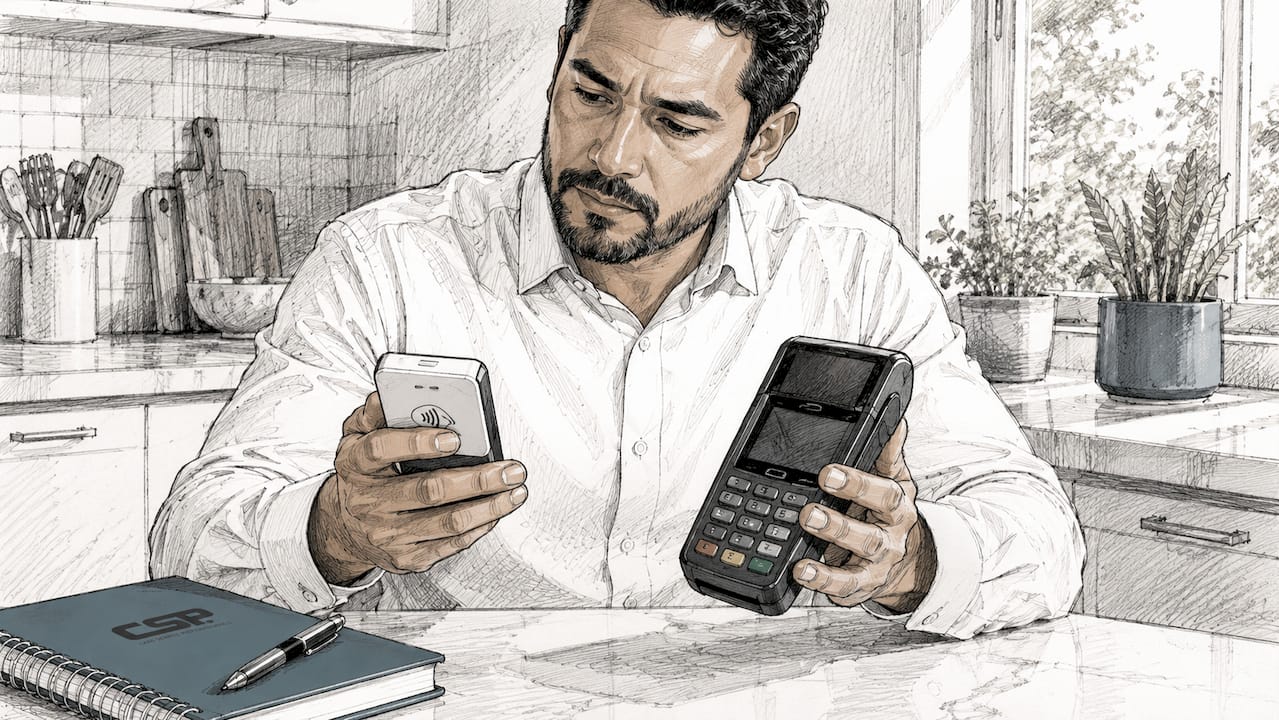
Modern card reader terminals universally support EMV chip reading, contactless NFC payments such as Apple Pay and Google Pay, and PIN debit transactions as standard features. Merchants who accept only magstripe swipes face higher fraud liability under current EMV liability shift rules.
The non-negotiable feature list for any terminal you buy or lease in 2026:
- EMV chip reading. Protects against counterfeit card fraud and shifts liability away from the merchant.
- NFC contactless acceptance. Covers Apple Pay, Google Pay, and tap-to-pay physical cards.
- Magstripe fallback. Still needed for older cards, though usage continues to decline.
- PIN debit support. Required for debit card transactions routed through PIN networks.
- Connectivity options. Ethernet and Wi-Fi for countertop units; Bluetooth and cellular for mobile units.
- PCI DSS compliance. Payment terminals must comply with PCI DSS security standards to protect cardholder data and encrypt every transaction.
- POS software integration. Terminals that sync with your inventory and reporting software save hours of manual reconciliation each week.
Pro Tip: Ask any terminal provider for the device’s PCI PTS certification number before signing a contract. A legitimate terminal will have one. If the provider cannot produce it, walk away.
Security compliance is not optional. PCI DSS adherence is a mandatory requirement for every merchant that stores, processes, or transmits cardholder data.
3. How to choose the right card reader terminal for your retail business
Matching a terminal to your business model is the single most important decision in this process. The wrong fit creates bottlenecks at checkout and unnecessary costs.
- Fixed checkout with high transaction volume. Choose a countertop terminal. It offers the fastest processing speed, the most reliable connectivity via Ethernet, and the lowest per-transaction failure rate. Retailers like grocery stores, pharmacies, and hardware stores fit this profile.
- Floor selling or curbside service. A mobile or handheld terminal works best. Staff can process payments anywhere in the store or parking lot without sending customers to a fixed register.
- Farmers markets, craft fairs, or pop-up retail. A mobile card reader attached to a smartphone is the right call. Hardware costs start at $19 and top out around $59 for models that support chip, swipe, and tap.
- Growing retail businesses that need inventory control. A smart POS terminal pays for itself quickly. It replaces a separate terminal, tablet, barcode scanner, and receipt printer with one device.
- Phone or mail order sales. A virtual terminal handles card-not-present transactions without any physical hardware. Pair it with a countertop terminal for in-person sales.
Pro Tip: Use your payment processing checklist to score each terminal option against your actual transaction volume, average ticket size, and connectivity situation before committing.
Experts recommend evaluating total cost of ownership including monthly software fees, hardware costs, and deposit speed rather than focusing only on headline processing rates. A terminal that costs $0 upfront but carries a $50 monthly software fee often costs more over 12 months than a $200 device with no monthly fee.
4. Feature comparison of card reader terminal categories
The table below compares the five main terminal categories across the factors that matter most to retail merchants.
| Terminal type | Mobility | Connectivity | Typical hardware cost | Software integration | Best for |
|---|---|---|---|---|---|
| Countertop terminal | Fixed | Ethernet, Wi-Fi | $150–$400 | Moderate | High-volume fixed checkout |
| Mobile/handheld terminal | High | Wi-Fi, cellular | $200–$500 | Moderate to high | Floor selling, curbside |
| Mobile card reader | Very high | Bluetooth, USB | $19–$59 | Basic | Pop-up, low-volume mobile |
| Smart POS terminal | Low to moderate | Wi-Fi, Ethernet | $400–$1,000+ | High | Growing retail, inventory mgmt |
| Virtual terminal | N/A (software only) | Internet browser | $0 hardware | Basic | Phone/mail orders |
Battery life is a real concern for mobile and handheld units. A terminal that dies mid-shift creates a poor customer experience and lost sales. Verify rated battery life and whether a charging dock is included before purchasing.
5. Specific considerations for Kentucky retail merchants in 2026
Kentucky retail merchants face the same payment technology requirements as merchants across the U.S., but a few regional factors shape the best choices.
- Tap-to-pay adoption is growing fast. Digital wallet use through Apple Pay and Google Pay continues to rise in U.S. retail. Any terminal you buy in 2026 must support NFC contactless payments out of the box.
- Mobile reader pricing is accessible. Hardware costs for mobile card readers range from $19 to $59, making them a low-risk entry point for small Kentucky retailers, boutiques, and seasonal vendors.
- EMV and PCI compliance are federal-level requirements. Compliance is not a regional issue. Every U.S. merchant must meet EMVCo chip standards and PCI DSS data security rules regardless of state.
- Deposit speed matters. Kentucky merchants with tight cash flow should ask providers about next-day or same-day deposit options. Slow deposit schedules create real working capital problems for small retailers.
- Local support and service. Hardware that breaks during peak hours needs fast replacement. Evaluate whether your provider offers phone support, advance replacement shipping, or a local service network.
Merchants evaluating business payment solutions should also ask about cash discount programs, which pass processing fees to customers who pay by card and eliminate processing costs for the merchant entirely.
Key takeaways
Retail merchants who match their terminal type to their specific transaction environment and evaluate total cost of ownership will consistently outperform those who choose hardware based on upfront price alone.
| Point | Details |
|---|---|
| Five terminal categories exist | Countertop, mobile/handheld, mobile reader, smart POS, and virtual terminals each serve different retail needs. |
| EMV and NFC are non-negotiable | Every terminal must support chip reading and contactless NFC payments to meet 2026 U.S. standards. |
| Total cost of ownership matters | Monthly software fees and deposit speed affect long-term costs more than hardware price alone. |
| Mobile readers are affordable | Hardware for mobile card readers starts at $19, making them accessible for small and seasonal retailers. |
| PCI DSS compliance is mandatory | Every terminal must meet PCI DSS security standards to protect cardholder data and avoid liability. |
What I’ve learned after years of watching merchants choose the wrong terminal
The most common mistake I see retail merchants make is treating hardware cost as the primary selection criterion. A merchant buys a $0 “free” terminal, signs a three-year processing agreement, and ends up paying $80 a month in bundled fees they did not read carefully. Over 36 months, that “free” device costs $2,880 in fees alone.
The second mistake is buying for today instead of buying for 12 months from now. A boutique that processes 50 transactions a week today may process 200 a week after a strong holiday season. A basic mobile card reader will not keep up. A smart POS terminal with inventory integration would have handled both volumes without a hardware swap.
The third thing I tell every merchant is to verify PCI DSS compliance before anything else. A terminal that is not PCI-certified exposes you to fines, chargebacks, and potential loss of your ability to accept cards. That risk is not worth any amount of savings on hardware.
Tap-to-pay is not a trend anymore. It is the default expectation for a growing share of U.S. shoppers, especially in the 25–45 age range. If your terminal does not support NFC contactless payments, you are already behind.
My honest recommendation: use the total cost of ownership framework to evaluate any terminal offer. Add up hardware cost, monthly fees, processing rates, and deposit speed over 24 months. The number that comes out tells you the real price of that terminal.
— Jerry
Card Service Professionals can help you find the right terminal
Choosing the right payment terminal is a business decision, not just a hardware purchase. Card Service Professionals works as an independent sales agent for several of the leading merchant service providers in the United States, which means we compare options across providers to find the best fit for your retail operation.

Whether you run a fixed retail store in Louisville, a seasonal market booth in Lexington, or a growing boutique anywhere in Kentucky, Card Service Professionals can match you with the right terminal, processing rate, and cash discount program. We offer competitive rates, next-day deposit options, and full support for EMV chip, NFC contactless, and PIN debit acceptance. Start your application today or visit Card Service Professionals to speak with a payment expert.
FAQ
What are the main types of card reader terminals?
The five main types are countertop terminals, mobile and handheld terminals, mobile card readers, smart POS terminals, and virtual terminals. Each serves a different retail environment and transaction volume.
Do all card reader terminals support contactless payments?
Modern card reader terminals universally support EMV chip, NFC contactless payments such as Apple Pay and Google Pay, and PIN debit as standard features in 2026. Any terminal that does not support NFC is outdated.
How much does a mobile card reader cost?
Mobile card reader hardware typically costs between $19 and $59 as of 2026, with some processing providers offering free devices when merchants sign up for their payment services.
What is PCI DSS and why does it matter for my terminal?
PCI DSS is the Payment Card Industry Data Security Standard, a mandatory set of security rules that every merchant terminal must meet to protect cardholder data and encrypt transactions. Non-compliant terminals expose merchants to fines and fraud liability.
How do I choose between a countertop terminal and a smart POS terminal?
Choose a countertop terminal for high-volume fixed checkout where speed is the priority. Choose a smart POS terminal if you need integrated inventory management, customer profiles, and sales reporting in addition to payment processing.
Recommended
- Mobile Card Reader for Retail Business: 2026 Guide – Card Service Professionals
- Accepting Payments on the Go: A Retail Merchant’s Guide – Card Service Professionals
- Why Small Retailers Need Card Processing in 2026 – Card Service Professionals
- Types of Merchant Processing Contracts: 2026 Retail Guide – Card Service Professionals
