



Card processing is the system that moves money from a customer’s credit or debit card to your business bank account, and for small retailers in the U.S., it is no longer optional. Accepting credit cards directly determines how much customers spend, whether they complete a purchase, and whether they return. According to a 2026 analysis by the Electronic Payments Coalition, merchants see 10–15% higher average transaction amounts once they start accepting cards. Understanding why small retailers need card processing means understanding how payment choice shapes every sale you make. Providers like Square, Stripe, and J.P. Morgan have built entire ecosystems around this reality, and Cardserviceprofessionals connects small retailers to those systems at competitive rates.
How does card processing boost sales for small retailers?
Card acceptance directly increases how much customers spend per visit. Customers spend 12–18% more when they can pay by card compared to cash-only environments. That gap is not accidental. Card payments remove the psychological ceiling that cash creates. A shopper with $40 in their wallet buys $40 worth of goods. That same shopper with a Visa card buys what they actually want.
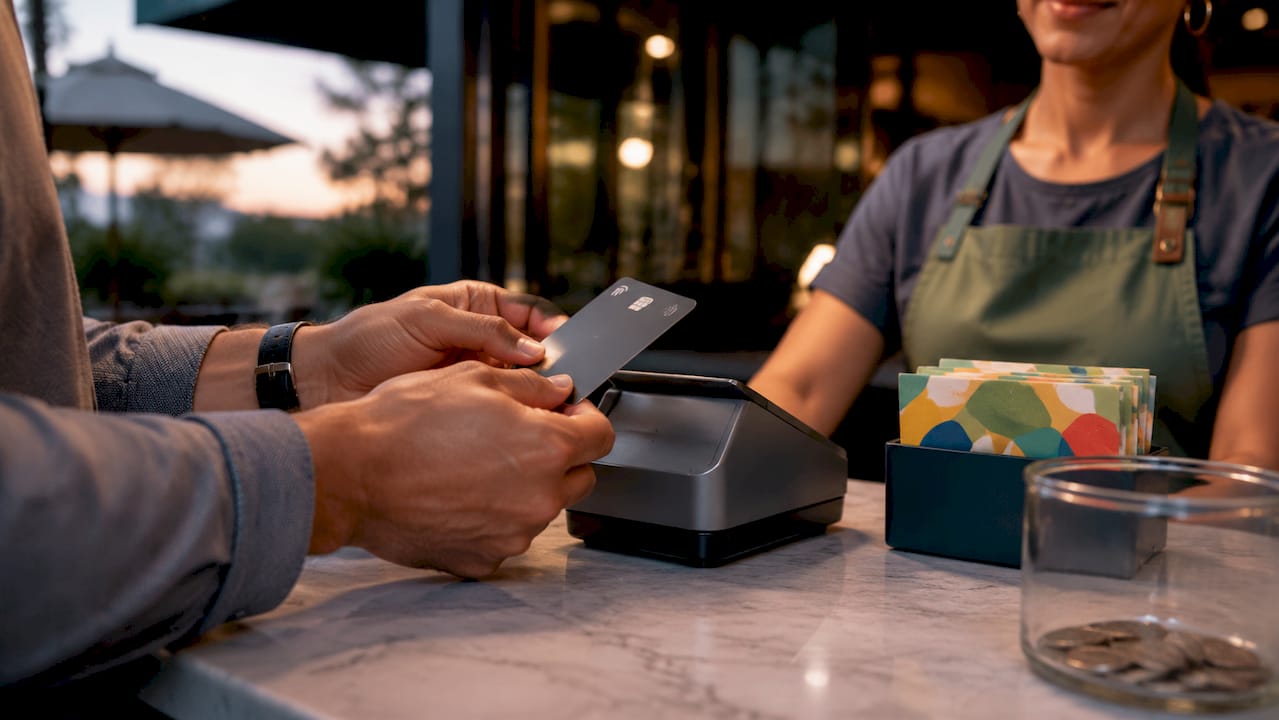
The benefits of card processing extend beyond impulse purchases. Rewards programs from Visa, Mastercard, and American Express actively motivate cardholders to spend more to earn points. When your store accepts cards, you tap into that built-in spending motivation. A boutique clothing store that switches from cash-only to full card acceptance does not just gain convenience. It gains access to a customer’s full purchasing power.
Here is what the data shows about card spending behavior versus cash:
- Higher average ticket size. Card users consistently spend more per transaction than cash users across retail categories.
- Fewer abandoned purchases. Seamless card acceptance reduces purchase abandonment and builds customer loyalty over time.
- Repeat visits. Customers who complete a smooth transaction return more often. Payment friction is a silent deal-breaker that sends shoppers to competitors.
- Larger basket sizes. Grocery and general merchandise retailers report that card-paying customers add more items per trip.
Pro Tip: If you run a food truck, pop-up shop, or market booth, a mobile card reader from Square or a similar provider turns any location into a full point-of-sale. You capture every sale instead of losing customers who do not carry cash.
Cash vs. card: which actually costs more to accept?
Most small retailers assume card processing fees are the expensive option. The math says otherwise. Handling cash costs U.S. merchants approximately 9% of transaction value annually, totaling roughly $121 billion across the country. That figure includes labor for counting and reconciling, armored car or bank deposit fees, theft and shrinkage losses, and manual accounting errors.
Card processing fees average 2–3% per transaction. That is a fraction of what cash actually costs once you account for every hidden expense. The comparison below makes the gap clear.
| Cost Factor | Cash Handling | Card Processing |
|---|---|---|
| Transaction fee | 0% visible, ~9% true cost | 2–3% per transaction |
| Theft and shrinkage risk | High, no recourse | Low, processor protections apply |
| Labor for reconciliation | Significant, daily | Minimal, automated reporting |
| Accounting errors | Common with manual counts | Rare with digital records |
| Fraud protection | None | Included with most processors |
| Chargeback management | Not applicable | Processor assists with disputes |
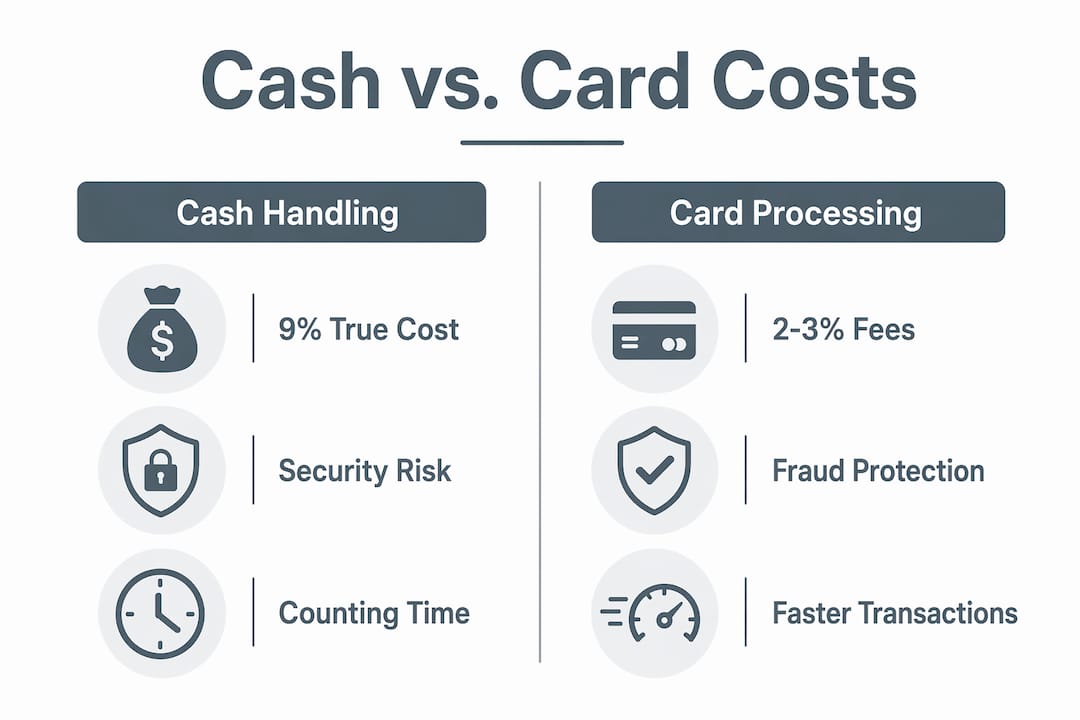
The 9% true cost of cash is not a fringe estimate. It reflects real operational expenses that most small retailers absorb without ever measuring them. Card processing fees are visible and predictable. Cash costs are invisible and variable. Predictable costs are easier to manage and plan around.
Pro Tip: Ask your processor about cash discount programs. Cardserviceprofessionals offers these programs, which pass the processing fee to customers who choose to pay by card while rewarding cash-paying customers with a small discount. Many retailers use this model to offset processing costs entirely.
What do small retailers need to know about payment security?
Payment technology is the foundation that makes card acceptance safe and reliable. A payment terminal acts as a digital bridge for secure transactions, encrypting card data at the point of contact and transmitting it through the processor’s network. Modern terminals from providers like Verifone and Ingenico support chip, tap, and swipe payments, which covers every card type your customers carry.
Security compliance is not optional. The Payment Card Industry Data Security Standard, known as PCI DSS, governs how every business that accepts cards must handle cardholder data. PCI compliance requires an annual Self-Assessment Questionnaire, and non-compliance carries monthly fees ranging from $19 to $100 plus exposure to data breach liability. Most small retailers qualify for the simplest SAQ tier, which takes under an hour to complete.
Fraud risk is real but manageable. Payment processors help manage chargebacks, fraud attempts, and compliance requirements that could otherwise drain cash flow. A processor is not just a fee collector. It is a risk management partner that monitors transactions, flags suspicious activity, and helps you dispute fraudulent chargebacks.
Modern integrated terminals reduce errors and fraud compared to manual card entry. When a customer taps their phone or inserts a chip card, the terminal handles encryption automatically. Manual entry, by contrast, creates opportunities for keystroke errors and exposes card numbers to interception. Upgrading hardware is one of the fastest ways to reduce fraud exposure without changing anything else about how you operate.
You can also review the payment security architecture that governs how card data moves through a processor’s network, which helps you ask the right questions when evaluating providers.
How do you choose the right pricing model and processor?
Pricing structure determines how much card acceptance actually costs your business each month. Two models dominate the small business market: flat-rate and interchange-plus. Choosing the wrong one at the wrong volume level is one of the most common and costly mistakes small retailers make.
Here is how to evaluate each option:
-
Flat-rate pricing charges a single percentage on every transaction, typically 2.6–2.9% plus a small per-transaction fee. Square and Stripe use this model. It is predictable and easy to understand, which makes it ideal for new retailers or those processing under $10,000–$15,000 per month.
-
Interchange-plus pricing separates the card network’s base rate from the processor’s markup. Flat-rate pricing becomes expensive above $10,000–$15,000 in monthly volume, and interchange-plus typically saves money at that threshold and beyond. The tradeoff is slightly more complex monthly statements.
-
Avoid long-term contracts when possible. Some processors lock retailers into multi-year agreements with early termination fees. Month-to-month agreements give you flexibility to switch if your volume grows or your needs change.
-
Evaluate the full fee picture. Monthly fees, PCI compliance fees, chargeback fees, and equipment lease costs all affect your true cost of acceptance. A detailed breakdown of ecommerce payment processing fees applies directly to in-store processing structures as well.
-
Match the processor to your business type. A high-volume gift shop has different needs than a low-volume specialty retailer. Volume, average ticket size, and card mix all influence which pricing model saves you the most money.
The processor you choose also affects your risk profile. Card processing risk management includes chargeback handling, compliance support, and account stability. A processor that freezes your account over a dispute can halt your cash flow for days. Choose a provider with a track record of working with small retailers, not just large enterprise clients.
Key takeaways
Small retailers that accept card payments consistently outperform cash-only competitors in transaction size, customer retention, and operational efficiency.
| Point | Details |
|---|---|
| Card acceptance raises revenue | Customers spend 12–18% more per transaction when they can pay by card. |
| Cash costs more than it appears | True cash handling costs reach approximately 9% of transaction value annually. |
| Security is manageable | PCI compliance and modern terminals protect your business without heavy technical overhead. |
| Pricing model matters at scale | Switch from flat-rate to interchange-plus pricing once monthly volume exceeds $10,000–$15,000. |
| Processor choice affects cash flow | A processor that handles chargebacks and fraud protects your revenue, not just your transactions. |
Why i think most small retailers are still thinking about this backwards
After years of working with small retail businesses across the U.S., I keep seeing the same mental block. Owners look at a 2.5% processing fee and see a cost. They rarely look at their cash handling expenses and see the same thing. The 2.5% is on the invoice. The 9% is buried in payroll hours, bank deposit trips, and the $200 that went missing from the register last quarter.
The retailers who grow fastest are the ones who stopped treating payment acceptance as an expense category and started treating it as a sales tool. A customer who cannot pay the way they want does not negotiate. They leave. That lost sale does not show up anywhere in your accounting, which makes it invisible and easy to ignore.
The other thing I have seen repeatedly is retailers waiting too long to switch pricing models. They start with flat-rate because it is simple, which is the right call. Then their volume grows and they stay on flat-rate because switching feels complicated. That inertia costs real money every month. The math on interchange-plus is not complicated. It just requires someone to sit down and run the numbers against your actual monthly statements.
Card acceptance is a core element of operational maturity that affects loyalty and purchase completion. The retailers who treat it that way build better businesses. The ones who treat it as a necessary evil tend to underinvest and overpay.
— Jerry
How Cardserviceprofessionals helps small retailers get this right
Small retail businesses deserve the same payment infrastructure that large chains use, at rates that actually make sense for their volume.
Cardserviceprofessionals works as a U.S.-based sales agent for some of the world’s leading merchant service providers, which means you get access to competitive rates, cash discount programs, and state-of-the-art POS equipment without the enterprise price tag. The onboarding process is direct and the support is built for retailers who want answers, not call center scripts. Whether you are setting up card acceptance for the first time or reviewing your current processor’s fees, start your application and see what better pricing looks like for your store. You can also visit Cardserviceprofessionals to review the full range of payment services available to small retailers.
FAQ
What is card processing for small retailers?
Card processing is the system that authorizes, transmits, and settles payments from credit and debit cards to a merchant’s bank account. It requires a payment terminal, a processor, and a merchant account.
How much do card processing fees cost small businesses?
Card processing fees average 2–3% per transaction depending on the pricing model and card type. Flat-rate plans from providers like Square charge a fixed percentage, while interchange-plus pricing varies by card network rate plus a processor markup.
Is accepting cards worth it for low-volume retailers?
Yes. Even at low volume, card acceptance reduces cash handling costs and increases average transaction size, which offsets processing fees in most retail categories.
What is PCI compliance and do small retailers need it?
PCI compliance is a set of data security standards required for any business that accepts card payments. Small retailers typically complete an annual Self-Assessment Questionnaire, and non-compliance carries monthly fees plus breach liability.
When should a small retailer switch to interchange-plus pricing?
Switch to interchange-plus pricing once your monthly card volume consistently exceeds $10,000–$15,000. At that level, the savings over flat-rate pricing become significant enough to justify the slightly more detailed monthly statements.
Recommended
- Card Service Professionals – Credit Card Processing Experts
- Sign Up Application – Card Service Professionals
- Company – Card Service Professionals
