


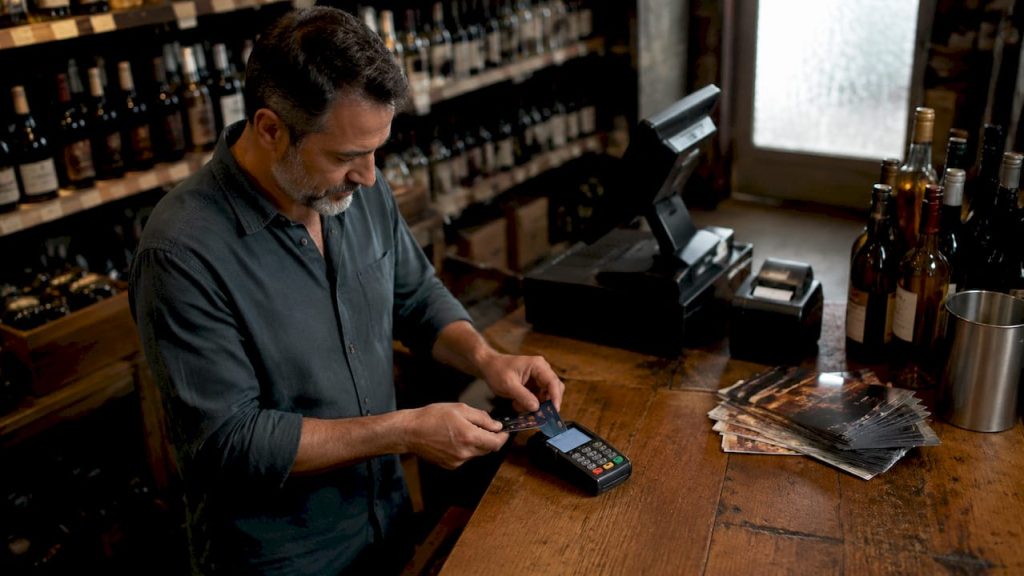
Liquor store payment processing is the system that enables your store to accept credit cards, debit cards, and digital wallets while managing the elevated fees, compliance requirements, and security standards specific to alcohol retail. Stores processing $120,000 per month often handle thousands of individual card transactions, which means even a fraction of a percent in unnecessary fees adds up fast. This guide covers everything from fee structures and dual pricing to the top payment terminals for liquor stores and chargeback prevention strategies that actually work.
What is liquor store payment processing and how does it differ?
Liquor store payment processing is a specialized form of merchant services designed to handle the unique risk profile, transaction volume, and regulatory demands of alcohol retail. Standard retail processing treats most businesses the same. Liquor stores face a different reality.
The core differences come down to three factors:
- Transaction volume vs. ticket size. Liquor stores typically run high transaction volumes with smaller per-transaction amounts compared to similarly sized retail businesses. That pattern demands fast, low-friction checkout systems.
- High-risk classification. Many payment processors classify alcohol sales as elevated risk due to chargeback rates and regulatory exposure. This can mean higher base rates or stricter underwriting.
- Regulatory compliance. Alcohol sales carry state-level licensing requirements that intersect with payment compliance. Your processor needs to support age verification workflows and detailed transaction records.
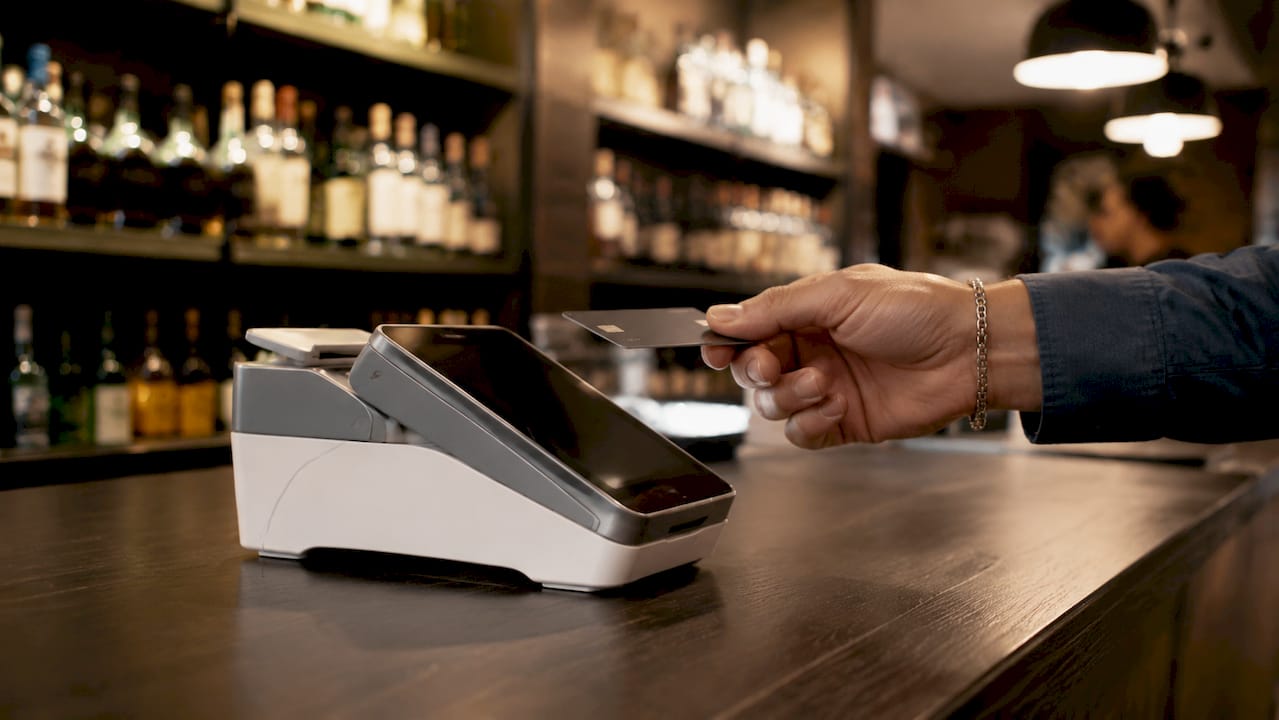
EMV chip technology and contactless payment support are not optional in this environment. EMV and PCI-compliant devices reduce fraud liability and protect your store from costly disputes. Any terminal you deploy should support chip, tap, and magnetic stripe at minimum.
Pro Tip: Ask your processor whether their system integrates directly with your POS software. A native integration eliminates manual reconciliation and reduces the chance of pricing errors at checkout.
What are the common fees in liquor store credit card processing?
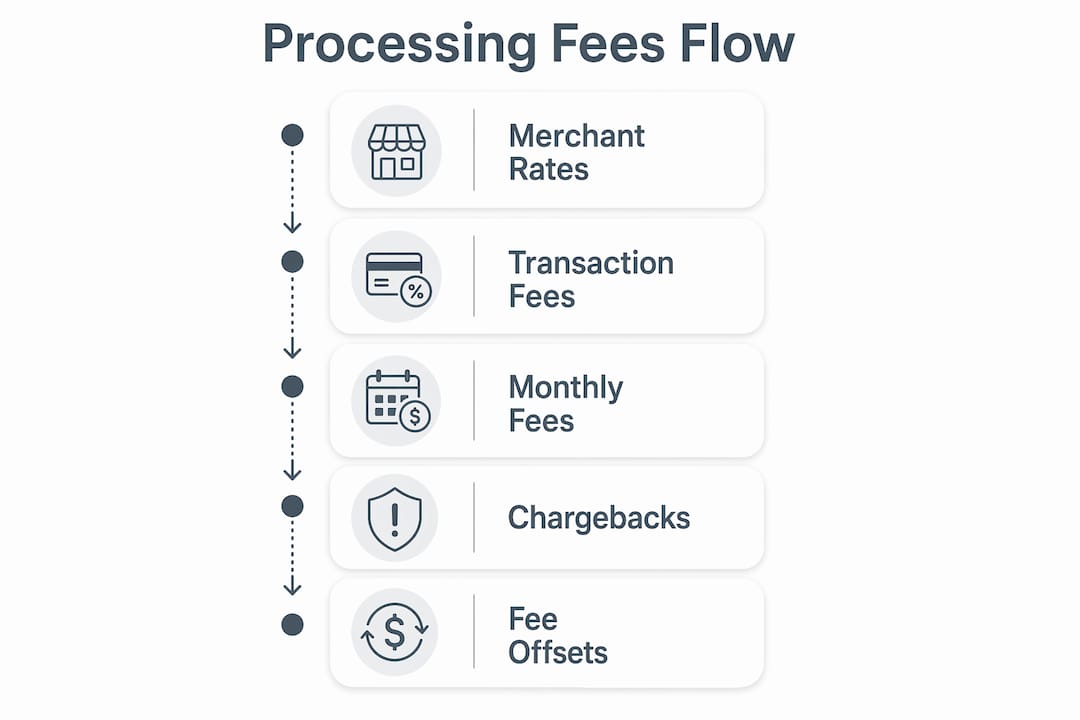
Credit card processing fees for liquor stores typically range from 1.5% to 3.5% plus a flat per-transaction fee. That range is wide because the final rate depends on your card mix, your processor’s pricing model, and whether you implement any fee-offset programs.
The main fee types you will encounter include:
- Interchange fees. Set by Visa, Mastercard, and Discover. These go to the card-issuing bank and are non-negotiable.
- Processor markup. This is where your negotiating power lives. Processors add their margin on top of interchange.
- Per-transaction fees. Typically $0.10 to $0.30 per transaction. On high-volume, low-ticket stores, these add up faster than the percentage fees.
- PCI compliance fees. Annual or monthly charges for maintaining Payment Card Industry Data Security Standard compliance. Skipping PCI compliance is not a cost-saving move. Non-compliance fees are typically higher than the compliance cost itself.
- Monthly statement or account fees. Flat fees that vary widely by processor.
The most effective way to offset processing costs legally is through dual pricing or a cash discount program. Dual pricing allows you to post two prices: one for cash customers and one for card customers. The card price reflects the cost of acceptance. This is legal in all 50 states when implemented transparently.
A cash discount program works similarly. Customers who pay with cash receive a discount off the posted price. Both models shift the cost of card acceptance to the customers who generate it, without violating card network rules.
Pro Tip: Run a 90-day fee audit before switching processors. Pull your monthly statements and calculate your effective rate (total fees divided by total volume). That number is your benchmark for any new proposal.
Which payment terminals are best for liquor stores?
The right terminal for a liquor store handles speed, security, and POS integration without requiring a separate device for every payment type. Three devices stand out for this environment.
PAX a920pro duo
The PAX A920Pro Duo supports chip, contactless NFC, and magnetic stripe payments and carries PCI PTS 7 certification, the current highest security standard for payment terminals. Its dual-screen design lets customers interact on one screen while the cashier manages the transaction on the other. That setup reduces checkout friction significantly in a high-volume store.
PAX a920 pro
The PAX A920 Pro adds a built-in barcode scanner to the standard chip, contactless, and QR code payment suite. For liquor stores that scan bottle barcodes at checkout, this eliminates a separate scanning device. It runs on Android, which means it integrates with a wide range of POS software platforms.
PAX a30
The PAX A30 is a countertop device suited for fixed-register setups. It supports all major payment types and connects via Ethernet or Wi-Fi. For stores that do not need mobility, it delivers reliable performance at a lower hardware cost.
| Device | Payment Types | Key Feature | Security |
|---|---|---|---|
| PAX A920Pro Duo | Chip, NFC, swipe | Dual screen, mobile | PCI PTS 7 |
| PAX A920 Pro | Chip, NFC, QR, swipe | Built-in barcode scanner | PCI PTS 5 |
| PAX A30 | Chip, NFC, swipe | Fixed countertop, low cost | PCI compliant |
All three devices support the top swipe, tap, and pay terminal functions that modern liquor retail requires. The right choice depends on whether your store needs mobility, scanning, or a fixed-register setup.
How can liquor stores minimize chargebacks and improve efficiency?
Chargebacks are a direct cost to your business. In alcohol retail, they carry extra weight because disputed transactions can trigger scrutiny from your processor. A proactive approach to chargeback prevention protects both your revenue and your merchant account standing.
Follow these steps to reduce chargebacks and tighten your payment operations:
- Use an integrated POS and payment system. Integrated payment solutions reduce manual entry errors and speed up transaction times. When your POS and terminal share data in real time, pricing discrepancies that trigger disputes become rare.
- Enable receipt delivery at every transaction. Digital or printed receipts create a paper trail. Customers who receive receipts dispute charges at a lower rate than those who do not.
- Activate fraud protection tools. Fraud protection and managed chargebacks are features offered by processors that specialize in higher-risk retail categories. Ask your processor specifically what chargeback management tools are included in your plan.
- Maintain clear return and refund policies. Post your policy at the register and on receipts. Ambiguous policies are the leading cause of friendly fraud disputes.
- Choose a processor with instant payout options. Instant payouts help you manage cash flow during weekends and holidays when banks are closed. Some processors offer 1% cashback on instant payouts as an added benefit.
- Review your chargeback ratio monthly. Most processors flag accounts above a 1% chargeback ratio. Catching a trend early gives you time to address the root cause before your account is at risk.
Speed matters as much as security. A slow checkout line costs you sales and customer loyalty. Terminals that process contactless payments in under two seconds keep lines moving during peak hours.
What legal and regulatory rules apply to liquor store payment processing?
Compliance in liquor store payment processing covers two distinct areas: card network rules and state-level alcohol regulations. Confusing the two is a common and costly mistake.
Key compliance points every liquor store owner should know:
- Dual pricing is legal in all 50 states. Transparent dual pricing requires posting both the cash price and the card price clearly. Customers choose their payment method with full information. This is compliant with Visa, Mastercard, and Discover rules.
- Surcharging is not the same as dual pricing. Illegal surcharging adds a fee to the card price without posting a lower cash price. Several states prohibit surcharging outright, and card networks impose strict rules on how surcharges must be disclosed. When in doubt, use dual pricing instead.
- PCI DSS compliance is mandatory. The Payment Card Industry Data Security Standard applies to every business that accepts card payments. Non-compliance exposes you to fines and increased liability in the event of a data breach.
- High-risk processor requirements. Some processors require additional documentation for alcohol retailers, including your state liquor license and proof of age verification procedures. Have these ready when applying for a merchant account.
State alcohol control boards do not regulate your payment processor, but they do regulate your business. Any payment system that creates a record of sales can be subpoenaed during a compliance audit. Keep your transaction records organized and accessible.
Key takeaways
Liquor store payment processing requires specialized hardware, transparent fee structures, and strict compliance to protect both your margins and your merchant account.
| Point | Details |
|---|---|
| Fee range awareness | Credit card processing fees run 1.5%–3.5% plus per-transaction costs; know your effective rate. |
| Dual pricing saves money | Posting separate cash and card prices legally offsets processing fees in all 50 states. |
| Terminal selection matters | PAX A920Pro Duo and PAX A920 Pro handle chip, NFC, and scanning needs for liquor retail. |
| Chargeback prevention is proactive | Integrated POS systems, fraud tools, and clear refund policies reduce disputes before they start. |
| Compliance is non-negotiable | PCI DSS compliance and transparent pricing practices protect your account and your license. |
What i have learned after years in liquor store payment processing
Most liquor store owners I work with come to us after a bad experience with a processor that treated them like a standard retail account. The fees were higher than quoted, the terminal did not integrate with their POS, and chargebacks piled up with no support from their provider. That pattern is preventable.
The single biggest mistake I see is choosing a processor based on the advertised rate alone. A 1.9% rate sounds better than 2.4% until you factor in the monthly fees, the PCI non-compliance penalty, and the $0.25 per-transaction fee on 4,000 monthly transactions. Do the math on your actual volume before you sign anything.
Dual pricing is the most underused tool in this industry. Store owners worry it will alienate customers. The data does not support that fear. When prices are posted clearly and staff explains the program confidently, most customers accept it without friction. The savings on a store doing $100,000 per month in card volume are significant enough to justify the setup cost many times over.
My other strong recommendation is to treat your payment system as infrastructure, not a commodity. The right terminal, the right integration, and the right processor relationship will save you more money over three years than any short-term rate negotiation. Build it right the first time.
— Jerry
How Cardserviceprofessionals helps liquor stores get payment processing right
Cardserviceprofessionals works directly with U.S. liquor store owners to set up payment processing that fits the real demands of alcohol retail. That means competitive rates, cash discount programs that comply with card network rules, and POS-compatible terminals like the PAX A920Pro Duo and PAX A920 Pro.
If you are paying too much in processing fees or dealing with chargebacks without support, the CSP Advantage is worth a look. Cardserviceprofessionals offers a full review of your current processing costs and a clear comparison against what you could be paying. You can also start your application directly online to get your merchant account set up for your store.
FAQ
What is liquor store payment processing?
Liquor store payment processing is the system that enables alcohol retailers to accept credit cards, debit cards, and digital wallets. It includes the terminal hardware, merchant account, and processor relationship needed to complete card transactions securely.
What credit card processing fees should liquor stores expect?
Processing fees typically range from 1.5% to 3.5% plus a flat per-transaction fee. Your effective rate depends on your card mix, pricing model, and whether you use a cash discount or dual pricing program.
Is dual pricing legal for liquor stores?
Dual pricing is legal in all 50 states when implemented correctly. You must post both the cash price and the card price clearly so customers can choose before paying.
What are the best payment terminals for liquor stores?
The PAX A920Pro Duo and PAX A920 Pro are strong choices for liquor retail. Both support chip, contactless NFC, and swipe payments, and the A920 Pro adds a built-in barcode scanner suited for bottle scanning at checkout.
How do liquor stores prevent chargebacks?
The most effective approach combines an integrated POS and payment system, clear refund policies, and processor-provided fraud protection tools. Reviewing your chargeback ratio monthly lets you catch problems before your merchant account is flagged.
Recommended
- Card Service Professionals – Credit Card Processing Experts
- Sign Up Application – Card Service Professionals
- The CSP Advantage – Card Service Professionals
