

Accepting credit cards in your maid service is the fastest way to get paid, reduce late payments, and meet the expectations of modern clients. Credit card payments typically process within 1–3 business days, compared to checks that can take weeks to clear. That speed directly improves your cash flow and reduces the time you spend chasing down payments. Merchant services, the industry term for credit card acceptance infrastructure, also require PCI DSS compliance and IRS 1099-K reporting awareness. This guide covers every step a maid service owner needs to get set up, stay compliant, and keep fees under control.
How to accept credit cards in your maid service
The foundation of credit card acceptance is a merchant account, a business bank account, and a valid EIN or SSN. These three items are what every payment processor requires before approving your application. Without a dedicated business bank account, you cannot separate personal and business funds, which creates tax problems and complicates your bookkeeping.
Once you have those in place, you choose the hardware or software that fits how your business collects payments. Maid services typically operate in three modes: in-person at the client’s home, over the phone for booking confirmations, or online through a booking form. Each mode calls for a different tool.
Payment tools that fit maid service workflows
- Mobile card readers: Small Bluetooth devices that connect to your phone or tablet. Mobile card readers typically cost $0–$49, making them the lowest barrier entry point for field-based maid services.
- POS terminals: Countertop units suited for maid services with a physical office or reception area. These handle tap, chip, and swipe transactions and print receipts on the spot.
- Online payment gateways: Web-based tools that let clients pay through a booking confirmation email or invoice link. Integrating payment links into your invoicing reduces accounts receivable aging and improves cash management.
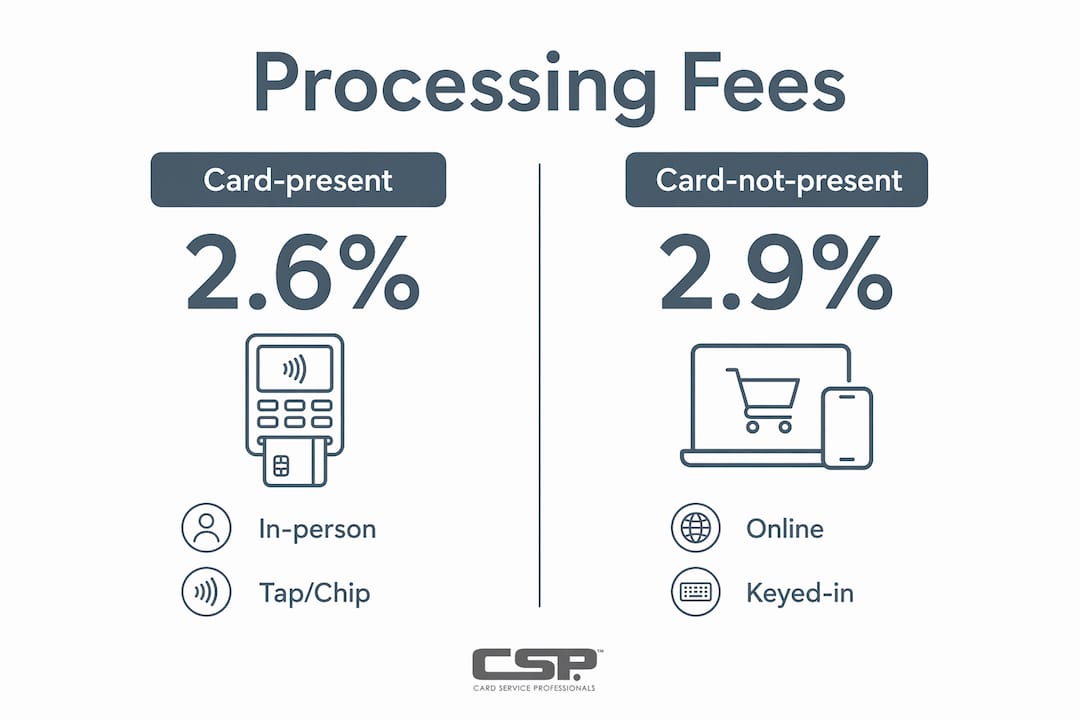
- Virtual terminals: Browser-based tools that let you key in card details over the phone. Processing fees for keyed-in transactions run 2.6%–2.9%, slightly higher than card-present rates because of increased fraud risk.
Pro Tip: Match your payment tool to your actual job mix. If 80% of your jobs are in-home visits, a mobile card reader is your primary tool. If you run a recurring subscription model, prioritize a gateway with automated billing.
What processing fees actually look like

| Fee type | Typical rate | When it applies |
|---|---|---|
| Card-present (tap/chip) | 2.6% | In-person transactions at client’s home |
| Keyed-in or online | 2.9% | Phone bookings, online payment forms |
| Hardware cost | $0–$49 | One-time purchase for mobile readers |
| Monthly account fee | Varies | Depends on processor and plan tier |
Choosing the right payment processor based on your job mix saves hours in manual reconciliation each month. That time savings compounds quickly as your client list grows.
How do you set up credit card processing securely?
Setup follows a clear sequence. Skipping steps creates compliance gaps that can cost you more than the fees you were trying to avoid.
- Choose a processor. Evaluate processors based on your primary collection method. In-field card-present collections and online booking automation have different technical requirements. Match the processor to the workflow, not the other way around.
- Complete the merchant application. You will provide your EIN or SSN, business bank account details, estimated monthly volume, and business type. Processors use this to assess risk and set your account terms.
- Link your business bank account. Funds from card transactions deposit directly into this account, typically within 1–3 business days. Never use a personal account for this step.
- Order and activate your hardware. If you use a mobile reader, download the processor’s app, pair the device, and run a test transaction before your first client appointment.
- Complete your PCI DSS self-assessment. Most small maid services qualify for SAQ-A or SAQ P2PE compliance, the simplest compliance levels available. These apply when you use encrypted card readers and never store card data locally.
Why PCI compliance matters for cleaning businesses
PCI DSS, which stands for Payment Card Industry Data Security Standard, is the global framework that governs how businesses handle cardholder data. Using PCI-compliant hardware means your maid service avoids expensive audits and meets compliance with minimal effort. The key rule is simple: never store card numbers on your phone, in a spreadsheet, or on paper. Use a processor that handles all card data on its own encrypted servers.
Card-present transactions using tap or chip technology significantly reduce fraud risk and chargebacks. The electronic signature and transaction log created at the point of service give you documented proof that the client authorized the charge. That documentation is your strongest defense in any dispute.
Pro Tip: Always use a hosted payment page or encrypted reader rather than building your own payment form. Hosted solutions keep card data off your systems entirely, which is the fastest path to PCI compliance.
What are the best practices to reduce fees and keep clients happy?
Fees are a real cost of doing business, but they are manageable with the right pricing structure and habits.
Flat-rate vs. interchange-plus pricing
Flat-rate pricing charges one consistent percentage on every transaction, regardless of card type. Interchange-plus pricing passes the actual card network cost through to you and adds a fixed markup on top. For maid services with predictable average ticket sizes, flat-rate pricing is easier to budget. For higher-volume operations, interchange-plus often costs less over time because premium rewards cards carry higher interchange fees that flat-rate absorbs into its margin.
Practical steps to protect your revenue
- Use tap-to-pay whenever possible. Card-present payments not only reduce fraud but also improve client trust because the transaction happens transparently at the point of service.
- Offer multiple payment options on one page. Clients prefer to use their existing payment method, and giving them that choice improves payment completion rates.
- Set a clear refund and cancellation policy. Put it in writing before the first job. Clients who understand your policy are far less likely to dispute a charge.
- Standardize your receipts. Include your business name, the date, and a job reference number. Recognizable charge descriptions reduce the number of clients who dispute a charge simply because they do not recognize it on their statement.
- Review your monthly statement every month. Many small business owners overlook fee audits, which quietly reduce profitability over time.
Pro Tip: A cash discount program lets you pass processing fees to clients who pay by card while rewarding cash-paying clients with a lower price. Card Service Professionals offers cash discount programs that are fully compliant and easy to implement for service businesses.
What are the most common problems when accepting cards in a maid service?
Even well-run maid services hit snags. Knowing what to expect lets you fix problems before they cost you money or clients.
- Declined transactions. The most common cause is a card that has reached its limit or expired. Always have a backup payment option ready, such as a payment link sent by text or email, so the job does not go unpaid.
- Chargebacks from confused clients. A client sees an unfamiliar charge on their statement and disputes it. Standardized receipts and clear business name descriptors on your merchant account prevent most of these. When a chargeback does arrive, respond with your signed authorization, job notes, and receipt.
- Setup delays. Processor applications can take 24–72 hours to approve. Apply before you need the account, not the day before a big job.
- Mixing personal and business payment tools. Running client payments through a personal Venmo or PayPal account creates tax reporting problems and looks unprofessional. Keep business payments in a dedicated merchant account from day one.
- Ignoring monthly statements. Processors occasionally add fees or adjust rates. A monthly review catches these changes before they compound.
“Clear deposits and transparent fee communication reduce customer disputes and maintain trust. Standardizing receipts to include recognizable business names and job references helps clients identify legitimate charges and dramatically cuts down on unnecessary chargebacks.”
The payment processing guide from Card Service Professionals covers in-person versus online payment risks in detail, which is worth reviewing before you finalize your setup.
Key Takeaways
Maid services that accept credit cards get paid faster, lose fewer clients to payment friction, and build a more professional operation from the ground up.
| Point | Details |
|---|---|
| Start with the basics | A business bank account and EIN are required before any processor will approve your application. |
| Match tools to workflows | Mobile readers suit in-home visits; online gateways suit recurring billing and booking confirmations. |
| PCI compliance is achievable | SAQ-A or SAQ P2PE qualification is within reach for any maid service using encrypted readers and hosted payment pages. |
| Card-present beats keyed-in | Tap and chip transactions carry lower fraud risk and stronger dispute protection than phone or online entry. |
| Audit fees monthly | Regular statement reviews catch unexpected charges before they quietly reduce your profit margin. |
Why I think most maid services wait too long to accept cards
The most common thing I hear from maid service owners is that they held off on card acceptance because they thought the fees were not worth it. I understand the instinct. When you are running a lean operation, every percentage point matters. But the math almost always works in favor of accepting cards once you account for the full picture.
Cash and check clients pay late more often. They bounce checks. They forget to have cash on hand on cleaning day. Every one of those situations costs you time, awkward follow-up calls, and sometimes the client relationship itself. Card payments eliminate most of that friction entirely.
The compliance piece trips people up too. PCI DSS sounds intimidating, but for a maid service using an encrypted mobile reader and a hosted payment page, the self-assessment is genuinely straightforward. You are not a bank. You do not need a bank-level audit. You need a good processor, the right hardware, and the discipline to never write down a card number.
The one mistake I see repeatedly is choosing a processor based on the lowest advertised rate without reading the full fee schedule. Monthly minimums, batch fees, and PCI non-compliance fees can easily erase the savings from a lower per-transaction rate. Read the full contract before you sign. Card Service Professionals works with multiple leading processors and can help you compare the real total cost, not just the headline rate.
— Jerry
Card Service Professionals: payment processing built for maid services
Running a maid service means your time goes to clients, not paperwork. Card Service Professionals works with several of the leading merchant service providers in the United States, giving you access to competitive rates, cash discount programs, and the right equipment for field-based service businesses.
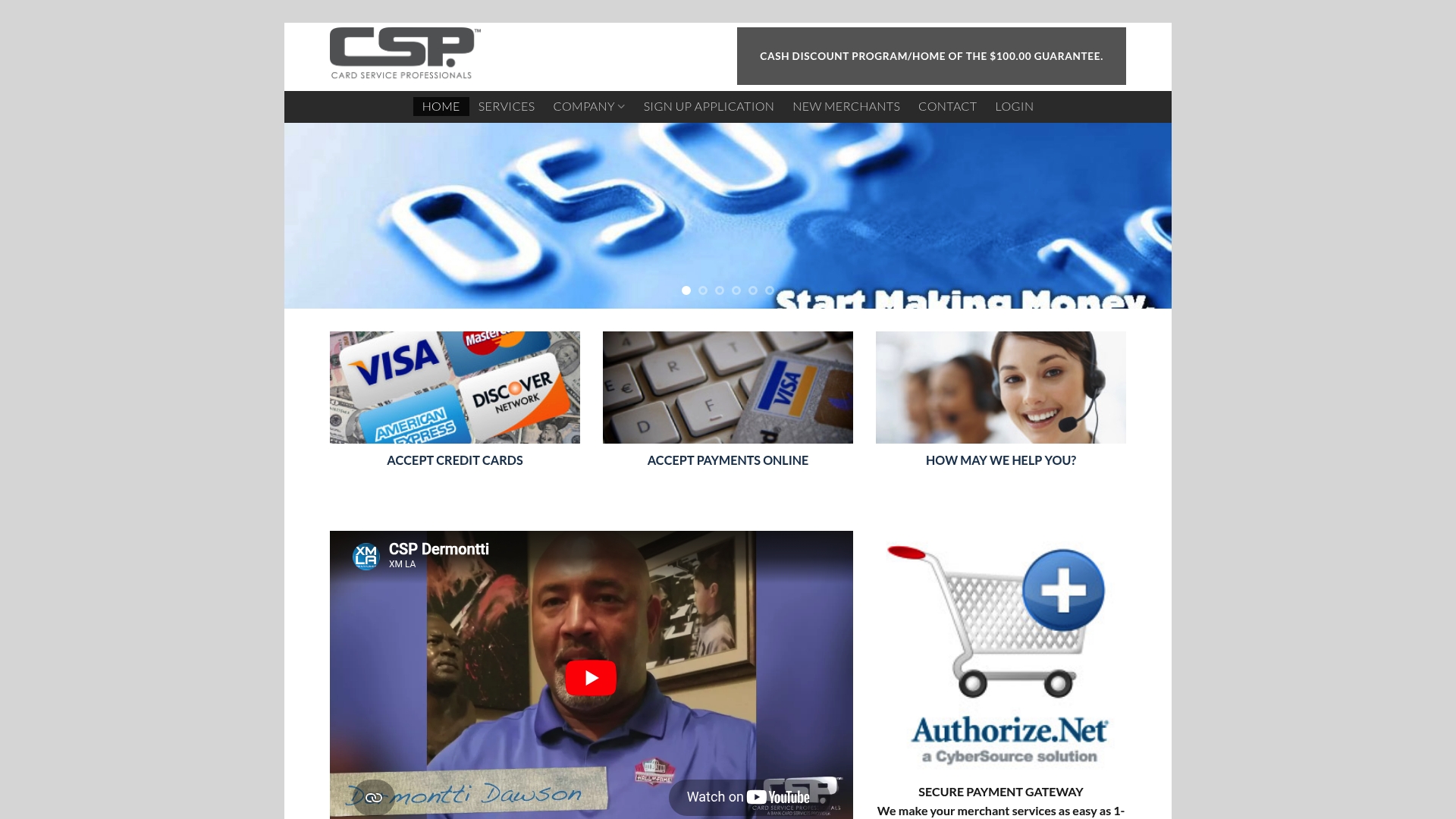
Whether you need a mobile reader for in-home visits or a full online payment setup for recurring clients, Card Service Professionals matches you with the right solution at a fair price. The sign-up process is straightforward, and expert guidance is available at every step. Visit Card Service Professionals to get started with a payment setup built for how your business actually works.
FAQ
What do I need to start accepting credit cards in my maid service?
You need a business bank account, an EIN or SSN, and an approved merchant account with a payment processor. Mobile card readers typically cost $0–$49 and let you accept cards on-site immediately after setup.
How much does credit card processing cost for a maid service?
Processing fees typically run 2.6%–2.9% per transaction, depending on whether the card is present or keyed in. Hardware costs are usually a one-time expense of $0–$49 for a mobile reader.
Is PCI compliance required for small maid service businesses?
Yes. Any business that accepts credit cards must meet PCI DSS standards. Most small maid services qualify for SAQ-A or SAQ P2PE, the simplest compliance levels, by using encrypted readers and never storing card data locally.
How do I handle a chargeback from a cleaning client?
Respond with your signed authorization, job notes, receipt, and any written communication confirming the appointment. Clear documentation and a recognizable business name on the client’s statement prevent most disputes before they become chargebacks.
Can I offer a cash discount to avoid paying credit card fees?
Yes. A cash discount program rewards clients who pay with cash by offering a slightly lower price, while card-paying clients cover the processing cost. Card Service Professionals offers compliant cash discount programs designed for service businesses.
Recommended
- Accepting Payments for Service Businesses: 2026 Guide – Card Service Professionals
- Card Service Professionals – Credit Card Processing Experts
- Why Accept Credit Cards in Retail: A U.S. Owner’s Guide – Card Service Professionals
- Accepting Payments on the Go: A Retail Merchant’s Guide – Card Service Professionals
